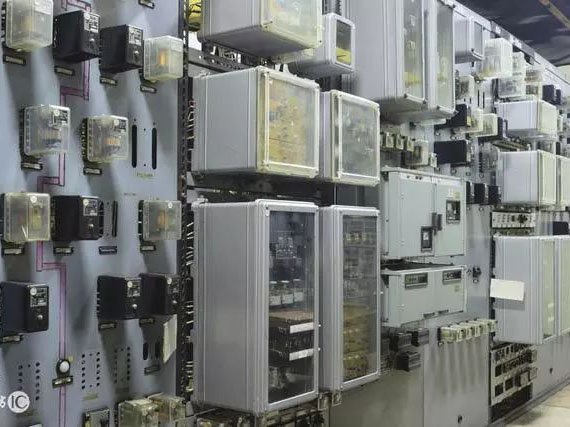
For a piece of equipment, the motion control, state monitoring, and other switch quantity control all need the electrical control system to complete. It can be said that the electrical control system is the brain of the equipment, and the foundation of this system is to carry out the electrical control system. design.
The basic principles of electrical control system design are:
1. To meet the requirements of production machinery and production process for electrical control system to the greatest extent. The basis of electrical control system design mainly comes from the requirements of production machinery and production process;
2. The design scheme should be reasonable. On the premise of meeting the control requirements, the design scheme should be simple, economical, easy to operate and maintain, and do not blindly pursue high indicators and automation
3. Mechanical design and electrical design should cooperate with each other. Many production machines use electromechanical combined control to achieve control requirements, so it is necessary to coordinate and handle the relationship between machinery and electricity in terms of process requirements, manufacturing costs, structural complexity, and ease of use and maintenance;
4. Ensure that the control system works safely and reliably.
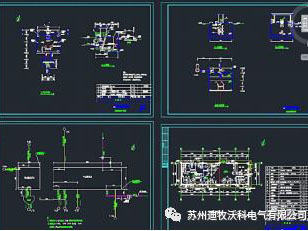
The interior of the electrical control system design mainly includes two parts: principle design and process design.
The content of the principle design includes: drawing up the electrical design task book, determining the electrical control scheme, designing the electrical control schematic diagram, calculating the main technical parameters, selecting the electrical components, formulating the component list, and writing the design specification.
The main purpose of the process design is to organize the manufacture of the electrical control system, so as to realize the technical indicators proposed by the principle design, and to provide relevant drawings and materials for the debugging, maintenance and use of the equipment. The main contents of the process design are: design the general electrical layout Drawings, general installation drawings and general wiring diagrams, design component layout drawings, installation drawings and wiring diagrams, design electrical cabinets, consoles and non-standard components, list components, and write maintenance instructions.
The basic task of electrical control design is to design and compile the necessary drawings and materials in the process of equipment manufacturing, use and maintenance according to the control requirements.
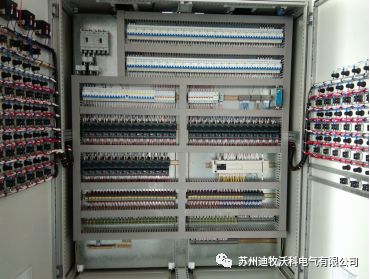
1. Overall configuration design of electrical control cabinet
The overall configuration design task of the electrical control cabinet is to first divide the control system into several components according to the working principle and control requirements of the electrical schematic diagram, and then divide each component into several components according to the complexity of the electrical control cabinet. According to the wiring relationship of the electrical schematic diagram, the incoming and outgoing wire numbers of each part are sorted out, and the connection mode between them is adjusted.
The overall configuration design is expressed in the form of the general assembly drawing and general wiring diagram of the electrical system. The diagram should reflect the location of the main components of each part, the wiring relationship of each part, the wiring method, and the wiring slot used, in a schematic form. pipeline etc.
The general assembly drawing and wiring diagram of the electrical control cabinet are the basis for subdivided design and coordination of each part to form a complete system.
The overall design should make the entire electrical control system centralized and compact, and at the same time, if the space allows, the heating elements and electrical components with large noise and vibration should be placed as far away from other components as possible or isolated. For large equipment with multiple stations, the convenience of operation in two places should also be considered: the main power switch of the control cabinet and the emergency stop control switch should be placed in a convenient and obvious position.
Whether the overall configuration design is reasonable or not is related to the manufacturing and assembly quality of the electrical control system, and will also affect the realization of the performance of the electrical control system, the reliability of its work, the convenience and quality of operation, debugging and maintenance.
1. Division of electrical control cabinet components
Due to the different installation positions of various electrical components, components must be divided when forming a complete electrical control system. The principle of dividing components is:
(1) Group elements with similar functions together;
(2) Minimize the number of connections between components as much as possible, and at the same time place the control electrical appliances with close wiring relationship in the same component;
(3) Separate the strong and weak current controllers to reduce interference;
(4) In order to strive for neatness and beauty, electrical appliances with similar dimensions and weights can be combined together;
(5) In order to facilitate the inspection and debugging of the electrical control system, the components that require frequent adjustment, maintenance and wearing are combined.
2. When dividing the components of the electrical control cabinet, it is necessary to solve the connection between the components, between the electrical cabinets, and between the electrical cabinet and the controlled device.
The wiring method between various parts and components of the electrical control cabinet should generally follow the following principles:
(1) The incoming and outgoing wires of switchgear and control panel are generally connected by terminal or terminal, which can be selected according to the current size and the number of incoming and outgoing wires.
(2) Use terminal blocks or industrial connectors to connect between electrical cabinets, control cabinets, cabinets (tables) and between them and the equipment to be controlled;
(3) Weak current control components and printed circuit board components should be connected by various types of standard connectors;
(4) The connection between components in electrical cabinets, control cabinets and cabinets (tables) can be directly connected by the wiring terminals of the components themselves. deal with.
2. the design of electrical components layout
The layout of electrical components is the combination of certain electrical components according to certain principles. The design of the electrical component layout drawing is based on the schematic diagram of the components, the division of components, etc.
The following principles should be followed when designing:
(1) The arrangement of electrical components in the same assembly should pay attention to installing the bulky and heavier electrical components under the electrical board, and the heating components should be installed on the upper or rear of the electrical control cabinet, but the thermal relay should be placed on the lower part. , because the outgoing end of the thermal relay is directly connected to the motor for easy outgoing, and its incoming end is directly connected to the contactor, which is convenient for wiring and keeps the wiring short and suitable for heat dissipation;
(2) Separate strong and weak electricity and pay attention to shielding to prevent external interference;
(3) The installation position of electrical components that need frequent maintenance, overhaul and adjustment should not be too high or too low, and the installation position of human-operated switches and instruments that need to be monitored frequently should conform to ergonomic principles;
(4) The arrangement of electrical components should consider the safety clearance, and be neat, beautiful and symmetrical. Electrical appliances with similar dimensions and structure can be placed together to facilitate processing, installation and wiring. If the wiring method is adopted, the distance between each row of electrical appliances should be appropriately increased to facilitate wiring and maintenance;
(5) After the position of each electrical component is determined, the electrical layout drawing can be drawn. The electrical layout drawing is drawn according to the outline of the electrical components, that is, its axis is the criterion, and the spacing size of each component is marked. The installation dimensions of each electrical component and its tolerance range should be marked according to the standards in the product manual to ensure the processing quality of the mounting plate and the smooth installation of each electrical appliance. The electrical components in the large electrical cabinet should be installed between the two installation beams. In this way, the weight of the cabinet can be reduced, the material can be saved, and it is easy to install. Therefore, the longitudinal installation size should be calculated in the design;
(6) In the design of electrical layout, it is also necessary to select the way of entering and exiting lines, terminal blocks, connectors or connectors according to the number of incoming and outgoing lines of this component, using wire specifications and outgoing positions, etc., and mark the incoming and outgoing lines in a certain order. Wiring number.
3. Design of wiring diagram of electrical components
The wiring diagram of electrical components is drawn according to the electrical principle of the components and the layout of electrical components. It represents the connection relationship of the complete set of devices and is the basis for electrical installation, maintenance and wiring.
The wiring diagram should be drawn according to the following principles:
(1) The drawing of the phase wiring table of the wiring diagram shall comply with the provisions of "Drawing of the Control System Function Table Diagram" in GB6988.6-1993;
(2) All electrical components and their leads should be marked with text symbols and wiring numbers consistent with those in the electrical schematic diagram. The project code, terminal number and wire number in the schematic diagram should be compiled in accordance with GB5094-1985 "Item Codes in Electrical Technology", GB4026-1992 "Electrical Equipment Wiring Terminals and Specific Wire Ends Identification and Application of Alphanumeric System General Rules " and GB4884-1985 "Insulated Wire Marking" and other regulations;
(3) Different from the electrical schematic diagram, all parts of the same electrical component (contacts, coils, etc.) must be drawn together in the wiring diagram;
(4) The electrical wiring diagrams are always drawn with thin lines. There are two types of wiring methods: front wiring and back wiring. Generally, front wiring is used. For simple electrical control components, if the number of electrical components is small and the wiring relationship is not complicated, the connection between components can be directly drawn: For complex parts, the number of electrical components is large, and the wiring is more complicated, generally use the wiring trough, as long as the wiring number is marked on each electrical component, it is not necessary to draw the connection between the components;
(5) The type, specification, cross-sectional area and color requirements of various wires used for wiring should be marked in the wiring diagram;
(6) When the component is connected to the external circuit, the input and output lines of the large-section wires should be connected by connectors, and the others should be connected through the terminal block.
4. Design of electrical control cabinet and non-standard parts drawing
In terms of hardware, the electrical control cabinet includes: cabinet, mounting plate, laminate, cooling device, operation panel part, cabinet moving device, lifting ring, etc., front door, rear door, left door, right door, etc.
Electrical control cabinets are divided into high-voltage cabinets, low-voltage cabinets, and some are mixed cabinets with strong and weak currents.
From the structural point of view, there are mainly:
1. Ordinary power cabinet + console. The power cabinet and the operation console are separated, and the strong electric parts (circuit breakers, transformers, frequency converters, contactors, etc. are arranged in the power cabinet), and the operation console is used to control the actions of the equipment and the status of the equipment. Monitoring, generally used for large, high-power equipment.
2. Piano-type console (also known as inclined console). Generally used for small equipment.
3. Computer console.
4. PLC cabinet. Equipment with many weak current control links.
The electrical cabinet design needs to consider the following aspects:
(1) Determine the overall size and structural type of the electrical cabinet and the cabinet according to the operation needs and the dimensions of the control panel, box, and various electrical components in the cabinet. Under non-special circumstances, the overall size of the electrical control cabinet should conform to the basic structural dimensions and series. ;
(2) According to the overall size, structure type and installation size of the electrical control cabinet, design the mounting bracket in the box, and mark the mounting hole, the size of the mounting bolt and the grounding bolt, and indicate the matching method. The materials of cabinets and boxes should generally be made of special profiles for cabinets and boxes;
(3) Design the door opening method and type of the electrical control cabinet according to the requirements of on-site installation location, operation and maintenance convenience;
(4) In order to facilitate the ventilation and heat dissipation of the electrical appliances in the control cabinet, ventilation holes or ventilation slots should be designed in appropriate parts of the box body. If necessary, forced ventilation devices and ventilation holes should be designed on the upper part of the cabinet body;
(5) In order to facilitate the transportation of the electrical control cabinet, a suitable lifting hook should be designed or a movable wheel should be designed at the bottom of the box.
In short, according to the above requirements, the outline sketch of the electrical control cabinet should be drawn first, the dimensions of each part should be estimated, and then the outline drawing should be drawn in proportion, and then the proportions of each dimension should be further considered from the aspects of symmetry, beauty, and ease of use. After the appearance of the electrical control cabinet is determined, the structural design of each part of the control cabinet shall be carried out according to the above requirements, and the general assembly drawing of the cabinet and the drawings of each door, control panel, bottom plate, mounting bracket, decorative strip and other parts shall be drawn, and the processing requirements shall be indicated. Then select the appropriate door lock for the electrical control cabinet as needed. Of course, the shape and structure of electrical cabinets are different, and attention should be paid to absorbing the advantages of various types in the design of the cabinet. For non-standard electrical installation parts, the parts diagram should be drawn according to the design requirements of the mechanical parts, and the tolerance requirements should be indicated for the matching dimensions, and the processing requirements should be stated.
Finally, according to various drawings, comprehensive statistics and summarization of various parts and materials required by the electrical control cabinet are carried out, and the summary list of purchased finished parts, standard parts list, main material consumption quota table and Auxiliary material quota table, etc., so that procurement personnel and production management departments can prepare materials according to equipment manufacturing needs, make production preparations, and facilitate cost accounting.